When a dog is diagnosed with kidney disease — or early kidney changes — it can feel overwhelming fast. Suddenly you’re reading labels, worrying about appetite, hydration, and wondering if you’re doing enough.
You’re not alone and you don’t have to figure this out by yourself. The Pet Pantry does not diagnose or treat medical conditions, but provides nutritional guidance and product recommendations.
Understanding Kidney Disease (CKD) in Dogs
The kidneys play a vital role in filtering waste, balancing fluids, and supporting overall wellness. When kidney function begins to decline, these processes become less efficient — often gradually and quietly.
Kidney disease is most common in senior dogs, but it can occur at any age. In many cases, changes are first noticed during routine bloodwork, before obvious symptoms appear.
Early support matters. The sooner you understand what’s happening and adjust thoughtfully, the more options you have.
Can Chronic Kidney Disease (CKD) be prevented?
In most cases, chronic kidney disease cannot be fully prevented, especially when it’s related to aging, genetics, or congenital factors. Kidney tissue that’s lost cannot regenerate, and many causes of CKD develop slowly over time.
What CAN help reduce risk or delay progression
1. Routine Veterinary Care & Early Detection
Regular wellness exams and bloodwork are one of the most important tools. Early changes often show up in lab results before symptoms are visible at home.
2. Proper Hydration Throughout Life
Chronic dehydration can place extra strain on the kidneys over time. Supporting good hydration habits — especially in senior dogs — helps kidneys do their job more efficiently.
3. Thoughtful, High-Quality Nutrition
While no diet can “prevent” CKD outright, long-term nutrition plays a role in overall kidney workload.
Nutrition isn’t about perfection — it’s about consistency and quality over time.
4. Avoiding Known Kidney Stressors
Some kidney damage can be caused by preventable exposures, such as:
Certain toxins (antifreeze, rodenticides, some plants)
Inappropriate medications or dosing
Severe or repeated dehydration
Untreated infections
Even when everything is done “right,” CKD can still occur. A diagnosis is not a failure and not something most pet parents could have prevented.
Early Signs of Kidney Disease in Dogs
Kidney disease often develops slowly, and the earliest signs can be subtle. Many pet parents don’t realize something is changing until routine bloodwork raises a flag — and that’s okay. Catching things early gives you more options and more time.
Some common early signs to watch for include:
Increased thirst or urination
Changes in appetite or increased pickiness
Gradual, unexplained weight loss
Lower energy or stamina
Occasional nausea, vomiting, or digestive changes
Changes in breath or oral health
A duller coat or gradual muscle loss
These signs don’t always mean kidney disease but they’re worth paying attention to. If something feels “off,” trust that instinct and talk with your veterinarian.
Early awareness, paired with thoughtful nutrition and support, can make a meaningful difference.
Kidney Markers — What They Mean
When your veterinarian reviews your dog’s bloodwork and urine tests, you may hear terms like creatinine, BUN, SDMA, phosphorus, or urine specific gravity (USG). These are all markers used to look at how the kidneys are working.
Kidney Markers
Creatinine:
A waste product the kidneys normally filter out. If creatinine is higher than expected, it can mean the kidneys aren’t filtering as well as they should.
BUN (Blood Urea Nitrogen):
Another waste marker; elevated levels may reflect reduced kidney filtration or dehydration.
SDMA:
A newer marker that may rise earlier than creatinine when kidney function starts to change. It can be especially helpful in early detection.
Phosphorus:
When kidneys can’t regulate phosphorus well, it can build up in the blood. Managing phosphorus intake is a core part of supportive nutrition.
Urine Specific Gravity (USG):
Shows how well the kidneys concentrate urine; more dilute urine can be an early clue of declining kidney function.
One elevated value alone doesn’t make a diagnosis. Veterinarians look at trends over time, repeat measurements, and consider your dog’s hydration and overall health.
Early understanding gives you and your vet more options as you support your dog’s kidney health.
Different Levels of Kidney Disease in Dogs
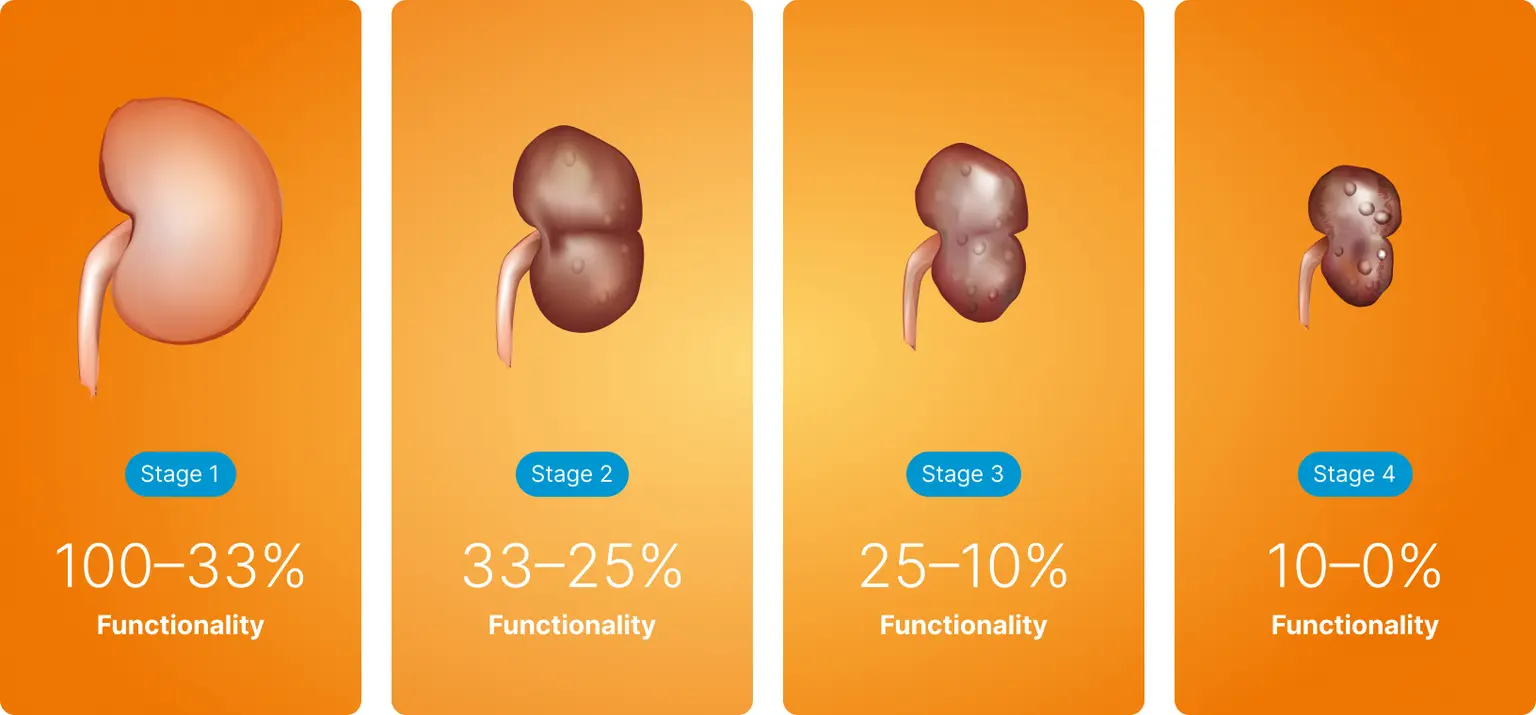
Chronic kidney disease (CKD) is typically divided into stages, based on how well the kidneys are still functioning. These stages help veterinarians decide how aggressively to treat, how often to monitor, and what kind of nutritional support makes sense.
Why Staging Matters
Not every dog with kidney disease needs the same food, supplements, or approach.
Early-stage dogs often benefit from supportive changes, not strict restriction
Later-stage dogs may need more structured diets and symptom management
Appetite and hydration matter at every stage
The best plan is one that fits your dog’s current stage, while staying flexible as things change.
Early Stage Kidney Disease (Stages 1–2)
What’s happening
Kidney function has started to decline, but many dogs still feel normal
Often discovered through routine bloodwork
Symptoms may be mild or not noticeable yet
Common focus
Monitoring trends, not just single lab values
Supporting kidney health early
Avoiding unnecessary stress on the kidneys
Nutrition & support approach
Thoughtful protein quality (not extreme restriction yet)
Phosphorus awareness
Omega-3 fatty acids
Hydration habits
Gentle, gradual changes
Slow progression while preserving appetite and quality of life.
Moderate Kidney Disease (Stage 3)
What’s happening
Kidney function is more noticeably reduced
Appetite, weight, or energy may start to change
Nausea or digestive upset may appear intermittently
Common focus
More structured nutrition support
Managing symptoms like nausea or poor appetite
Closer monitoring by your veterinarian
Nutrition & support approach
More deliberate protein and phosphorus control
Increased emphasis on palatability
Hydration support becomes more important
Supplements or medications may be added by your vet
Help your dog feel better day to day while supporting kidney function.
Advanced Kidney Disease (Stage 4)
What’s happening
Significant loss of kidney function
Symptoms are more noticeable and frequent
Appetite and hydration can be challenging
Common focus
Comfort, stability, and quality of life
Symptom management
Frequent veterinary check-ins
Nutrition & support approach
Appetite-first decision making
Flexible feeding strategies
Hydration support under veterinary guidance
Adjusting expectations as needs change
Maintain comfort, routine, and connection.
Is There a Cure for Chronic Kidney Disease (CKD)?
Chronic kidney disease means there has been permanent damage to the kidneys. Once kidney tissue is lost, it cannot regenerate which is why CKD is considered progressive and irreversible.
What Is Possible If There’s No Cure?
While CKD can’t be cured, it can often be slowed and managed. The goal of care is to:
Reduce the workload on the kidneys
Manage symptoms like nausea, poor appetite, and dehydration
Support hydration and nutrition
Preserve muscle mass and energy
Maintain comfort and daily routine
Think of CKD care as long-term support, not a one-time fix.
If Your Dog Has Kidney Disease: What to Know
A kidney diagnosis doesn’t mean everything has to change overnight. The most successful support plans are steady, realistic, and adaptable.
Here are the most important things to understand.
Veterinary Care Comes First
Kidney disease is a medical condition. Regular bloodwork, urine testing, and veterinary oversight are essential. Nutrition works best when it supports your vet’s plan — not replaces it.
Nutrition Is Powerful, but..
There is no single “perfect” kidney diet for every dog. The goal is support without stress, not perfection.
Hydration Matters
Healthy hydration helps kidneys function more efficiently. Many dogs with kidney disease need encouragement to stay hydrated through:
Constant access to fresh water
Moisture-rich or wet foods
Adding water or vet-approved broths to meals
Small hydration habits can make a meaningful difference.
Appetite Is a Priority
A dog that won’t eat can’t benefit from any plan. Appetite often fluctuates with kidney disease, and that’s normal.
Consistency matters more than chasing the “perfect” food. Eating something reliably is often better than eating a “perfect” diet inconsistently.
Expect Adjustments
Kidney disease changes over time. What works today may need tweaking later — and that’s not a setback. Good care evolves with your dog.
Above all, quality of life comes first.
Tips on Treats: Treats should not be more than 10 – 15% of the total calorie (kcal) requirement of your pet per day.
Avoid treats notoriously high in phosphorus and protein: most meats, jerky treats, bully sticks, rawhides, pig ears, antlers and real bones
To stimulate dogs’ appetites, you can add sweet items like maple syrup or honey – make sure to incorporate these calories into treat allowances
Safe fresh foods to give: Watermelon, Apples, Bananas, Green beans, Baby carrots, Broccoli, Zucchini, and Blueberries
Our Approach: Support
Kidney disease looks different for every dog.
Our Kidney Health Support Program is designed to help you navigate nutrition choices with confidence, without pressure or fear-based messaging.
We focus on:
Nutrition guidance that supports kidney health and appetite
Palatable food options dogs actually enjoy
Gentle transitions that protect digestion
Omega-3 support and hydration awareness
Ongoing guidance as your dog’s needs change
No hard sells. No medical claims. Just thoughtful support from people who care deeply about your dog’s well-being.
1. Tell us about your dog Fill out a short form about your dog’s age, diagnosis, current food, appetite, and recent changes.
2. Review We review your information and recommends nutrition options that make sense for your dog — not just their lab numbers.
3. Try, adjust, and support We help you test options, fine-tune portions, and make adjustments. Kidney support is a process, not a one-time decision and we will be with you every step of the way.
This IS: ✔ Nutrition focused support ✔ Appetite first thinking ✔ Personalized guidance ✔ A partner for the long haul
This is NOT: ✖ A medical diagnosis ✖ A replacement for veterinary care ✖ A “cure” or miracle claim
We believe the best outcomes come when veterinary care, nutrition and informed pet parents work together.
Kidney disease doesn’t mean giving up joy or quality of life. With the right support and thoughtful nutrition, many dogs continue to live happy, comfortable lives for years.
The Pet Pantry provides nutritional guidance and support. We do not diagnose or treat medical conditions. Always consult your veterinarian regarding your pet’s health.
F.A.Q.'s
Are there different stages of kidney disease in dogs?
Yes. Chronic kidney disease in dogs is commonly divided into stages, ranging from early to advanced. These stages help veterinarians determine monitoring frequency and treatment approach. Early stages often focus on supportive care, while later stages may require more structured management and symptom support.
Can dialysis be done for dogs with kidney disease?
Dialysis is available for dogs, but it’s rarely used for chronic kidney disease. It’s more commonly used for acute kidney injury, where kidney function may recover. For CKD, long-term supportive care is usually the more practical and compassionate approach.
Can dogs with kidney disease still have treats?
Yes, but treat choices matter. Many dogs with CKD can enjoy treats that are lower in phosphorus and sodium. It’s always best to check with your veterinarian or nutrition advisor to choose options that fit your dog’s specific needs.
Can kidney disease in dogs be prevented?
CKD can’t always be prevented, especially when it’s related to aging or genetics. However, regular veterinary checkups, early bloodwork, good hydration, and thoughtful long-term nutrition can help reduce risk and catch kidney changes earlier, when more options are available.
Does diet really matter for dogs with kidney disease?
Yes — nutrition plays a major role in supporting dogs with kidney disease. The right diet can help reduce strain on the kidneys, support hydration, and improve day-to-day comfort. There is no single “perfect” food for every dog, which is why individualized guidance matters.
How can I help keep my dog hydrated with kidney disease?
Hydration is critical for dogs with CKD. Providing fresh water at all times, feeding moisture-rich foods, and adding water or vet-approved broth to meals can help support hydration. Small daily habits can make a big difference.
How long can a dog live with kidney disease?
Every dog is different. Some dogs live months, while others live for years with good quality of life — especially when kidney disease is caught early and supported properly. Ongoing veterinary care, nutrition, hydration, and monitoring all play a role.
Is protein bad for dogs with kidney disease?
Protein isn’t bad — but the amount and quality matter. In early stages, extreme protein restriction is often unnecessary. In later stages, protein levels may be adjusted to help manage symptoms. The goal is to provide highly digestible protein while supporting appetite and overall well-being.
Is there a cure for chronic kidney disease in dogs?
No, there is currently no cure for chronic kidney disease in dogs. CKD involves permanent damage to the kidneys. However, the disease can often be managed, and its progression may be slowed with proper veterinary care, nutrition, hydration, and ongoing support.
What are the early signs of kidney disease in dogs?
Early signs of kidney disease in dogs can be subtle. Common signs include increased thirst, more frequent urination, changes in appetite, gradual weight loss, lower energy, occasional nausea, or changes in breath. Many dogs show no obvious symptoms early on, which is why routine veterinary bloodwork is so important.
What if my dog won’t eat kidney food?
This is very common. Appetite can fluctuate with kidney disease, and forcing strict diets often backfires. Consistent eating matters more than perfection. A gradual transition, improved palatability, and supportive guidance can help find an option your dog will actually enjoy.
What is chronic kidney disease (CKD) in dogs?
Chronic kidney disease (CKD) is a condition where a dog’s kidneys gradually lose their ability to filter waste and balance fluids in the body. CKD is typically progressive and permanent, but with early detection and thoughtful care, many dogs continue to live comfortable, happy lives.
Why is phosphorus important in kidney disease?
As kidney function declines, phosphorus can build up in the body. Managing phosphorus intake is one of the most important nutritional considerations for dogs with CKD. Lowering phosphorus can help reduce stress on the kidneys and support long-term comfort.
Should I switch my dog’s food immediately after diagnosis?
In most cases, no. Sudden food changes can cause digestive upset or food refusal. A slow, intentional transition — guided by your veterinarian or nutrition advisor — is usually the best approach.
When should I call my veterinarian?
You should contact your veterinarian if your dog stops eating, vomits repeatedly, becomes very lethargic, shows sudden changes in urination, or seems uncomfortable. Prompt care can make a meaningful difference.
Is Sweet Potato a Good Treat for Dogs With CKD?
Sometimes — in small amounts, and depending on the dog’s stage and lab values. Sweet potato isn’t toxic or dangerous for dogs with chronic kidney disease, but it does contain phosphorus and potassium, which are nutrients many CKD dogs need to manage more carefully. So it’s not a free-for-all “safe” treat — it’s a use-with-intention option.