

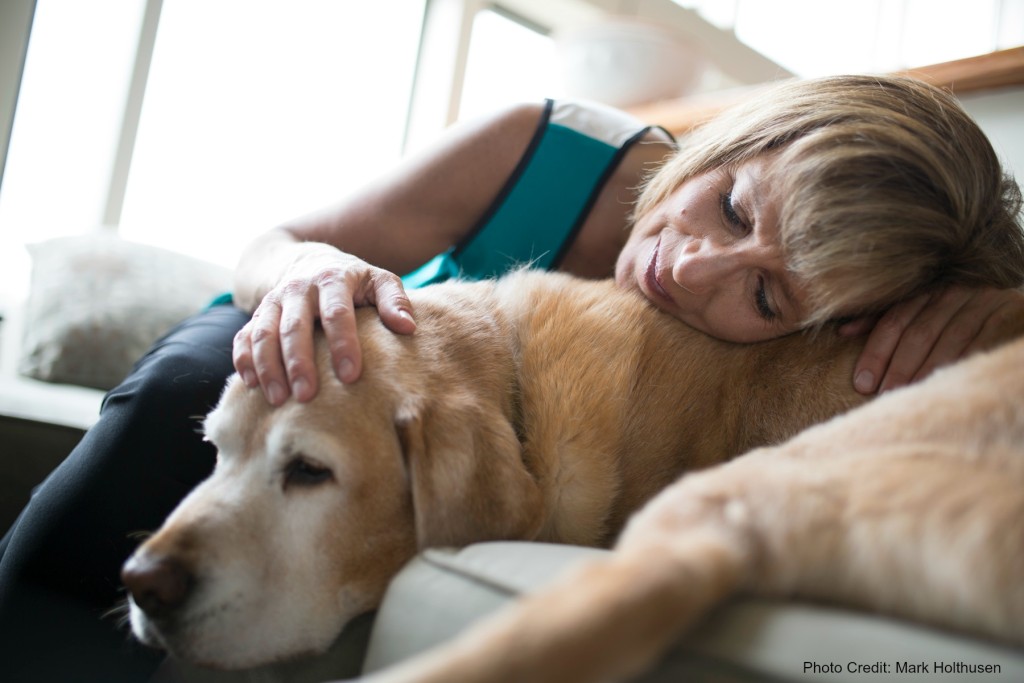
What I wish More Families Knew About End-of-Life Care for Their Pets
5 September 2026
End-of-life care isn't only about deciding when it's time to say goodbye. It's about helping your pet—and your family—navigate the days and decisions that come before it.
By Azure Holland, DVM
A Note from The Pet Pantry
Loving our pets also means being there for the hardest part of their lives. We asked local veterinarian Dr. Azure Holland, whose practice focuses exclusively on end-of-life care, to share what she wishes more pet parents knew about recognizing changes, evaluating quality of life, and knowing when to ask for help.
I’ve spent many years helping families navigate the end of their pet’s life. If there’s one thing I’ve learned, it’s that most people have a lot of questions:
How will I know when it’s time?
What should I be looking for?
Am I waiting too long?
Am I doing this too soon?
I hear these questions every day. I wish more families knew that they don’t have to have all the answers and they don’t have to figure this out alone.
You May Not Just "Know"
People tell me all the time, “I thought I would just know when it was time.”
Sometimes you do. But a lot of the time, you don’t.
Usually, there isn’t one big moment when everything suddenly becomes clear. More often, it’s a series of small changes that begin adding up.
Maybe your dog still goes on his walk, but he doesn’t seem as excited about it anymore. Maybe your cat still gets into her favorite window, but she’s doing it less often. They may still be eating, but not with the same enthusiasm. They may be sleeping more or interacting less.
Nothing feels significant on its own, but together, those changes can tell us a lot. When you see your pet every day, gradual changes can be difficult to recognize.
Start With the Things Your Pet Loves
One simple thing I encourage families to do is think about three to five things their pet truly loves, and I mean your pet.
Maybe your dog loves his morning walk, barking at the mailman, riding in the car, eating dinner, and sleeping next to you. Maybe your cat loves sitting in the window, yelling for breakfast, chasing one particular toy, grooming herself, and sleeping on your pillow.
Write those things down and then pay attention.
Are they still doing them? Do they still seem to enjoy them? Have they stopped doing one or two?
The first time your dog turns down a walk does not mean it’s time to say goodbye. The point is to begin noticing what makes a good day a good day for your pet.
Keep a Simple Journal
I also encourage families to keep a simple daily journal. This does not need to become homework. At the end of each day, jot down a few words:
“Good day. Ate well. Wanted to go outside.”
“Didn’t eat breakfast, but had a good afternoon.”
“Restless last night. Had a hard time getting comfortable today.”
That’s enough.
When you’re living this day after day, one good day can make you feel like everything is fine again, while one bad day can make you feel like you’ve reached the end.
A journal helps you step back and ask a better question:
How have the last two weeks been?
That often tells us much more than asking, “How was today?”
Use a Quality-of-Life Tool as a Guide
Sometimes families simply don’t know what they should be looking for. That’s where a quality-of-life tool can be helpful.
A quality-of-life assessment encourages you to consider your pet’s comfort, appetite, mobility, hygiene, interaction, enjoyment, and ability to do the things that matter to them. We have a quality-of-life tool on the Azure Holland website that families can use at home.
I don’t see these tools as a test where you add up a number and suddenly have your answer. The value is in the questions.
You may realize, “I hadn’t noticed how much she’s stopped grooming herself,” or, “He is eating, but he’s really not interested in much else anymore.”
Those observations matter. Using the tool more than once can also help you recognize changes over time.
Sometimes You Need Someone to Talk It Through With
You can do all of this and still feel completely unsure. That is very normal.
This is your pet. You may have loved and cared for them for 10, 15, or even 20 years. It can be incredibly difficult to step back and see the whole picture.
Sometimes you need someone to listen to what you’re seeing, ask the right questions, and help you sort through it. I’ve had many conversations in which a family tells me everything that has been happening. I ask a few questions, we talk through the changes, and somewhere in that conversation, they begin to hear what they’re telling me.
I’m not making the decision for them. I’m helping them process it, and there is a difference.
Your regular veterinarian can absolutely be part of that conversation. Sometimes, it also helps to speak with a veterinarian who spends a great deal of time specifically helping families navigate end-of-life decisions.
That is a major part of what we do at Azure Holland.
You Don’t Have to Be Ready for Euthanasia to Schedule a Consultation
Families sometimes think they should only reach out to us once they have decided it is time to schedule euthanasia. That is not the case.
Sometimes you simply need a brief phone conversation. Sometimes you want more time with one of our veterinarians by phone or video to talk through your pet’s quality of life, what you’re noticing, what may come next, and what questions you should be asking.
In other situations, an in-home consultation is the best fit.
We can meet your pet where they are comfortable, observe how they move and interact in their own environment, perform a hands-on assessment, and then sit down with you to discuss what we’re seeing.
You may be looking for a second opinion. You may want help understanding whether the changes you’re noticing are significant. You may want to know what to expect as your pet’s condition progresses. Or you may simply need someone to help you put the whole picture together.
You do not need to be ready to schedule euthanasia before asking for that support.
You Don't Have to Wait for a Crisis
You do not have to wait until your pet stops eating completely. You don’t have to wait until they can’t stand. You don’t have to wait until every good day is gone.
And you don’t have to wait for something terrible to happen before you allow yourself to begin planning.
In fact, I would much rather have these conversations earlier. Ask what changes should concern you. Ask what a crisis might look like. Knowing ahead of time what would constitute an emergency and what you would want to do if one occurs, can make an already difficult situation a little less overwhelming.
Planning ahead is not giving up. It is simply planning.
We’re Looking for a Window, Not a Perfect Day
Families put enormous pressure on themselves to get the timing exactly right, but there usually isn’t one perfect day. We’re looking for a window.
It is okay if your pet still has some good moments. It is okay if they ate breakfast that morning. It is okay if they wag their tail. It is okay if your cat sat in the sunshine and purred.
Those moments do not automatically mean you have made the decision too soon. Sometimes, they simply mean your pet was able to have a good last day.
You Have Choices About What Goodbye Looks Like
For some families, saying goodbye at their veterinary hospital is exactly what they want.
Others prefer in-home euthanasia, where their pet can remain in a familiar place surrounded by the people and things they know.
At home, your dog can be in his bed. Your cat can be on the couch or in your lap. You can be outside under a favorite tree. There can be music playing and favorite people nearby. Your pet can even eat something completely ridiculous if they want to.
It can look like your family.
You can also think ahead about what you want afterward, including aftercare and keepsakes. These are decisions you can make before the hardest day.
Your Pet Doesn't Know What You Know
Your pet doesn’t know that you’ve made an appointment for Thursday. They don’t know that you’ve been lying awake wondering whether you’re doing the right thing. They aren’t thinking about whether today is too early or next week would be too late.
That’s what we carry.
Your pet knows that you’re there. They know your voice, your smell, and the way you touch them.
They know they’re with their person.
You Probably Aren't Going to Feel Ready
I hear this all the time: “I know it’s time. I’m just not ready.”
Knowing your pet may be ready and feeling ready to lose them are two completely different things.
I’ve been present for a lot of last days. I’ve heard the stories and every nickname an animal collected over a lifetime. I’ve watched families bring out favorite foods and favorite blankets. I’ve listened as people told their pets how much they loved them and what they meant to them.
There is so much love in those rooms. That is probably the biggest thing I wish families knew.
End-of-life care is not only about the moment a pet dies. It is about caring for them through this part of their life, too.
You can ask questions. You can plan ahead. You can ask for help.
And you do not have to do it alone.
About Dr. Azure Holland
Dr. Azure Holland is the founder of Azure Holland, a veterinary practice focused exclusively on supporting pets and their families through end-of-life care. For more than a decade, Dr. Holland has helped families navigate these deeply personal decisions with clarity and compassion.
Need help deciding what comes next?
The Azure Holland team offers phone, virtual and in-home end-of-life consultations, as well as in-home euthanasia. You don't need to have made any decisions before reaching out. Call or text: 919-600-1841
You may also be interested in

5 August | 10 min to read

1 May | 10 min to read

5 March | 10 min to read

23 February | 10 min to read

3 October | 10 min to read

2 October | 10 min to read